Final

Jeanne Dielman: The Queen of Quarantine

The year is 2020, the writer is me, the time is quarantine, and the class I am in requires me to watch an almost four-hour long, obscure, cult-classic, “feminist,” film (but we’ll get into that), a Criterion Classic, entitled: Jeanne Dielman, 23 Commerce Quay, 1080 Brussels. Apparently, most scholars view this as a feminist film, but after watching the film, I was positively awestruck by how voyeuristic I felt, watching this woman do her menial tasks. Perhaps that I had just completed working on a project on Laura Mulvey’s Visual Pleasure and Narrative Cinema, but all I could think of was the forced voyeurism of watching this woman untangle; not knowing when she would have wanted cameras to see her, and when she would not have wanted cameras to see her. I could not stop thinking about the intimate moments I felt that I was spying on, and more acutely, how shockingly familiar it felt watching Jeanne Dielman’s mental state unravel in juxtaposition to watching that of a woman’s, (or more personally, myself, in 2020, in quarantine) mental state unraveling.
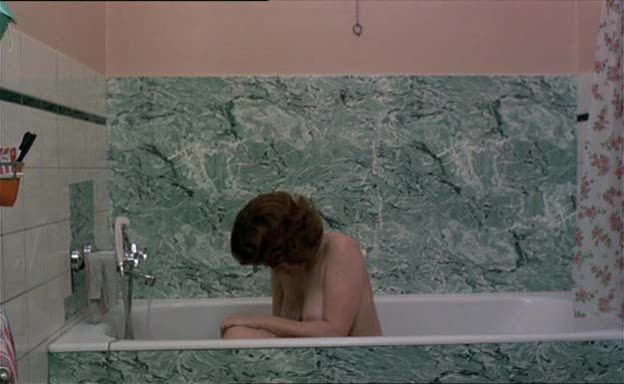
A scene that makes me feel voyeuristic – Jeanne in the tub

The formatting of the film, the three days, also lends itself to the “quarantine breakdown,” many have been experiencing. Many have joked about the fact that “people are going so crazy that they’re shaving their heads,” but the amount of mental illness that can be created by forcing one to be alone and/or to be stuck inside is no laughing matter. Jeanne Dielman spends most of her time alone and most of her time inside. The first day could be likened to the start of this virus, (and this argument, is of course, for those of us fortunate/privileged enough to be in safe places): trying to be clean, trying to work out, trying to take care of ourselves, trying to get dressed every day, trying to cook. The second day is the reality of the madness: when the cabin fever sets in, things start breaking, arguments happen, and emotionally, I personally, and Jeanne, began/begin to break down. The third day is the catastrophe: the mess that this has made of all of us, the untidiness, the forgetfulness, and the thing that shocks us it out of it all: the murder. In my case, I really hope that my quarantine does not end in murder, however, I feel as though I can relate to her breakdown. I’m trapped in my cell, and she’s certainly trapped in hers. My cell being my one-bedroom apartment alone during quarantine; her cell being her life, the patriarchy, how she makes money, and the menial tasks that encompass her. 

Jeanne’s menial chores

That being said, I cannot see this film as a feminist film. Felicia Elliott notes in an article on The Cinessetial, “Director Chantal Akerman said in a 2009 interview, ‘…if I did the film now I don’t know that it would be called feminist. It could have been done about a man, too.’” It may have been feminist in the 70s to spend time watching women do rigid tasks, repeatedly, but now, in my opinion, it just seems to be a relic of feminism of the past. I hope that now, in the 4th wave of feminism, we can acknowledge that this film is an artifact of a certain time and a piece of history, but no longer necessarily feminist. Watching Jeanne be stuck in such a traditionally feminine role, is not overtly empowering. She’s not a feminist icon, she’s an oppressed human, both sexually and verbally. She clearly has trauma that she passes to her son. 

Chantal Akerman – In search of lost culture | Global Geneva
Chantal Akerman

This is clear in the way that she and her son communicate. There is no healthy communication between them. They barely greet each other and appear to be opposites; where she is womanly, petite, and immaculately groomed, he is boyish, very tall, and messy. They are extremely awkward around one another, and although he seems older than a teenager, it’s very challenging to tell exactly how old he is. They act bizarrely towards each other, with her sparing no details from her sister’s letter, including the parts where her sister describes how badly she feels for her that she is all alone; and because she does not comment on her decision to be alone, unless pressed, her son has no conception of sex or love. The exchange in which her son explains that if he was a woman, he would want to have sex with anyone who wanted to have sex with him, being answered with her, “How would you know? You’re not a woman,” seems to me, almost just “seemingly” feminist. She tries to teach him the bare minimum of the male gaze but still keeps both him and herself in the dark, both figuratively and literally.

Jeanne Dielman, 23 Quai du Commerce, 1080 Bruxelles (1975 ...
Jeanne literally turning off the lights

She spends the whole film turning the lights off. Jeanne Dielman lives in a purposely dark world. She is turning the lights off on her life, her opportunities, and her sexuality. Everything is oppressed. Her son, in contrast, is always turning the lights on. The only people asking Jeanne questions are in the light – her son and the woman she babysits for. Everyone else is silent or in the dark. I imagine that she has spent most of her life, and of course, specifically in this film, examining herself in the mirror. In both the opening of the film and the end – before she kills the John that makes her climax – she stares at herself in the mirror. In Jean Kilbourne’s Killing Us Softly: Advertising’s Image of Women, Kilbourne explains how advertisements lead women to think about their bodies as individual items. Staring at oneself in the mirror, accessing these items, adds to that. She explains in her lecture:

 “Women’s bodies continue to be dismembered in advertising. Over and over again just one part of the body is used to sell products, which is one of the most dehumanizing thing you can do to someone. Not only is she a thing, but just one part of that thing is focused on.

Preview for Jean Kilbourne’s Killing Us Softly 4

We spend so much time watching Jeanne Dielman put together every part of her being. The hair, scrubbing herself clean in the shower, how she dresses – how she quite literally turns herself into a machine, an item – instead of a human. She is a few parts of a woman, but not a whole human. It is clear how important looks are to her. Everything must be perfect. When her son comes in during the second day, when she is beginning to fall apart, the first thing he says to her (which in my opinion, is blatantly both rude and strange), is “your hair is a mess.” He doesn’t ask her if she is okay or how she is, but simply puts her down because of her appearance. Even as she is unraveling, she is wearing high heels. It all leads me to question – for a feminist film, why is it all so repressed? If she is as connected to her sexuality as she must be, why is her son so seemingly infantile when it comes to sex? His friend Yan is clearly aware of his sexual awakening, and yet, Sylvain is so sexually withdrawn. 

Ivone Margulies writes for The Criterion Collection:

 “Never casual, each of the film’s uniquely strange and long-winded monologues expresses some form of gendered pressure: they refer to Jeanne’s marriage, the son’s Oedipal thoughts, each breathing a sexual anxiety, each a drawn-out, wordy attempt to mitigate the ‘other scene’ we never see, the elided afternoon trysts.

Her son has Oedipal thoughts about her, which is, honestly, frightening. Is that what is happening to people in Quarantine? I hope not. Why is he so sexually scarred that the thought of his parents having sex disgusted him? What had traumatized him; or – who? Is her need to comply with the order, as Margulies writes, actually “obsessive-compulsive?” Her desire to be perfect – is that a woman’s repression or actual mental illness? 

Jeanne Dielman, 23 Commerce Quay, 1080 Brussels (1975) - Chantal ...

In our class we spoke a lot about how feminists are split on the matter of sex work and I can’t say that I see this film as pro-sex work at all. Even though her job is to be completely sexual, she is at the hands of the patriarchy and her repression. Sex isn’t “sexy” – it’s a chore. In this household, it’s a job. It’s not anything for Sylvan to want or desire, it’s something that he literally needs to protect his mother from. Who would be considered the “evil” in this film? The sex work? The societal standards? The men? The patriarchy? All of the above? I personally am not a fan of sexwork, as I find that it contributes to the patriarchy. I know that my professor, Ian Barnard, feels very differently. In this film, however, I really only see the negative involve in Jeanne working in the sex industry. Honestly – why is she even a sex worker? Does she get pleasure out of it? Jeanne doesn’t seem to get a lot of pleasure out of anything. Why doesn’t she make money as a clerk at the grocery counter or a seamstress or by doing a million other (feminine) jobs she could have done during the 60s/70s? Why does she choose sex work? 

I am sad for Jeanne. I am sad that being both so repressed and oppressed leads her to her fatal end. It’s sad that she felt as though she needed to kill a man to conquer the mess that was beginning to become her life that was falling apart. Her life revolves around the men she serves. In fact – the film barely passes the Bechdel test. On the Bechdel Test’s website they note that it barely passes the test, as to pass the test, it must: “1. It has to have at least two [named] women in it, 2. Who talk to each other, 3. About something besides a man.” There is Jeanne and the child’s mother (who DOES NOT have a name), and they do talk to each other, about groceries – but it’s short and sudden. Even though it may be historically “feminist,” I personally do not see this as a feminist film; additionally, I do believe that it is easy to juxtapose Jeanne’s mental breakdown with the mental breakdowns many are suffering from/are having currently due to COVID-19. 
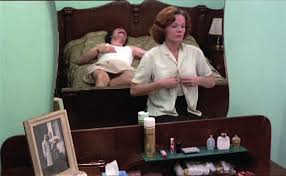
A NEON SIGN, A SOUP TUREEN: THE JEANNE DIELMAN UNIVERSE

Works Cited

Davidson, Alex. “Chantal Akerman for Beginners.” British Film Institute, 1 Apr. 2016, http://www.bfi.org.uk/news-opinion/news-bfi/features/chantal-akerman-beginners.

Donadio, Rachel. “The Director’s Director: Chantal Akerman.” The New York Times, The New York Times, 25 Mar. 2016, http://www.nytimes.com/2016/03/27/movies/the-directors-director-chantal-akerman.html.

Elliott, Felicia. “Messy, Complicated Feminism.” The Cinessential, 9 May 2017, http://www.thecinessential.com/jeanne-dielman/feminism.

Lim, Dennis. “Then as Now, the Terrors of the Routine.” The New York Times, 18 Jan. 2009, archive.nytimes.com/www.nytimes.com/2009/01/18/movies/18lim.html.

Margulies, Ivone. “A Matter of Time: Jeanne Dielman, 23, Quai Du Commerce,1080 Bruxelles.” The Criterion Collection, 17 Aug. 2009, http://www.criterion.com/current/posts/1215-a-matter-of-time-jeanne-dielman-23-quai-du-commerce-1080-bruxelles.

Meckler, Jeremy. “U Of M Students Respond to ‘Jeanne Dielman, 23 Quai Du Commerce, 1080 Bruxelles.’” Walker Art Center, 15 Nov. 2011, walkerart.org/magazine/u-of-m-students-respond-to-jeanne-dielman-23-quai-du-commerce-1080-bruxelles.

Mulvey, Laura. “Visual Pleasure and Narrative Cinema.” Screen, vol. 16, no. 3, 1975, pp. 6–18., doi:10.1093/screen/16.3.6.

Mwic. “Bechdel Test Movie List.” Jeanne Dielman, 23 Quai Du Commerce, 1080 Bruxelles – Bechdel Test Movie List, Creative Comments, 19 June 2012, 14:14:58., bechdeltest.com/view/3368/jeanne_dielman,_23_quai_du_commerce,_1080_bruxelles/.

Blue

Blue left me feeling blue,

emptier than I was already feeling,

from the isolation,

from the lonliness,

from the anxiety,

from the days alone on end.

Blue turned to black as days turned to gray.

Nights became day as the screen churned and changed,

and blue became questionable.

Is blue, blue?

If it is blue,

is it the same as everyone else’s blue?

How long will I be alone before I start seeing blue?

Even if I never seen blue at all?

Race in Paris is Burning

Don’t worry everyone – just another white woman here to discuss race in Paris is Burning – exactly what you asked for, right? I’d like to compare Contreras’s ideas on New Queer Cinema with hooks’s ideas of Paris is Burning. Where hooks explains why she is bothered by the images of the black people in this film, Contreras writes on 121,

“If, for example, we detach, however imaginatively, the concept of masculinity from men, we draw upon the ability of queer people to fashion and refashion identities and practices that may only superficially resemble heterosexual constructs.”

Contreras, 121

Contreras is able to detach the identities of the human beings in play for new realities, where hooks finds it important to validate the identities they already have. But Contreras isn’t right to do so; as what would these people be without their identities? I can’t imagine being anything but a cis-white heterosexual in the 90s, as one is apparently only allowed to have one “abnormality” that makes them different. They can be gay, or black, or Latinx, or trans, but not all of them; and Contreras doesn’t seem as aware of the worship of whiteness that hooks has a problem with. Contreras writes, “In the film, not one person is marked visibly as white. The only white images are quick edit clips of rich New Yorkers walking on Park Avenue, glossy magazine photographs, and the cast of TV’s Dynasty. But that can’t be true if the queens “voguing” are trying to emulate white women.

To me, Contreras problem is the same problem with Madonna’s appropriation with Voguing. Is it better that it has become popularized? That it is out in the wold for “white culture” to see? Contreras writes, “Madonna represented a commercial manifestation of this ‘new multiculturalism,” (126). I’m not going to lie and say that I didn’t struggle with both of these articles; I would really love to discuss further about representations of whiteness and how they pertain to camp/drag.

A Big ‘Ol Trigger Warning for Domestic Assault/Abuse

SERIOUSLY PLEASE DO NOT READ THIS BLOG POST IF IT WILL TRIGGER YOU – THERE’S A LOT OF PERSONAL INFORMATION ABOUT MY ASSAULT IN HERE.

The Body Remembers When the World Broke Open tells an important story that I don’t think I’ve ever personally seen before in traditional Hollywood cinema. Although it’s subtle, to watch the aftermath of what experiencing Rosie’s assault does to Alia is a piece of PTSD reality that I have never seen on screen. As a survivor of a domestic assault (a strangulation attempt), similar to Rosie’s (I had the same bruises on my neck, arms, and face) by my ex-boyfriend, who I loved very much – and didn’t leave, I feel as though I know these women. Two days after he assaulted me, he dumped me, and made my life a living nightmare. I felt for Rosie and could understand what she was going through; even though my privilege as a middle class-wealthy white woman obviously makes my relationship to my ex-boyfriend different than Rosie’s to her boyfriend – or “lover” as she calls him, which is fascinating – as the audience sees absolutely no love between the characters during the time of the film (with the exception of Rosie’s defense of him). I lived with him and had no connection to my family. I only had him – he was my world. 

When the woman working at the safe house says to Alia that it often takes multiple tries before a woman who is being domestically assaulted attempts to actually leave her abuser, I was almost blown away by the reality of that (even though I know the facts and figures) – and also of I, myself, also refused to share my story or what had happened to me for months; hoping that I would get back together with my ex. He assaulted me in May of 2017, and with the exception of my parents seeing the physical bruises on me, I didn’t tell anyone (including my therapist), what had happened to me until October of 2017. That’s 6 whole months of no action as a man I thought I loved absolutely tormented me. Being afraid of making it worse is atrocious and happens so often; as soon as I reported what had happened, my ex became more abusive. He would stare at me from windows, follow me into elevators, scoff at me when he saw me, would ride his bike close to me, and would sit three seats away from me in the library – despite there being another 3 floors and another whole library for him to study in. His retaliatory actions became so bad, and my school was so sexist and negligent with my Title IX case, that I ended up using my school with the DOE and Office of Civil Rights and getting a restraining order (which I did by myself, no help from my parents – completely pro-bono, [thank God, or whatever is up there]). 

But now, that time is remembered as all sort of a blur. Handling trauma in perhaps not the healthiest way, by shutting it out, has been the easiest for me – and for years now, since 2017, I have avoided most drama/comedy (anything that isn’t documentary) as it is usually too triggering for me. I don’t really want to see happy couples in love when I’m afraid of most men, and I certainly don’t want to see depictions of physical assault (I’ve tried to watch Big Little Lies easily 4 times and haven’t succeeded once), as they throw the rest of my day off. Since my assault, however, I’ve been working on fully learning Dialectical Behavioral Therapy – and most recently, a new type of DBT dedicated to PTSD. Just like Alia can’t breathe after she finds Rosie on the street, I feel that often. The sudden, overwhelming fear that triggers one’s body into complete betrayal and shock. I’m currently learning DBT-PTSD, and working on re-learning the feelings of fear and hurt. I’m reworking the way that my brain sees trauma, and this film was a really great exercise in that. When I typically see a domestic assault, I shut down. Now when I see it, I’m working on experiencing those feelings, while recognizing that they are not currently happening to me. Although Rosie’s assault is very similar to mine, my body is learning to undo the typical PTSD responses I experience when I’m triggered by something as horrible as her situation. It’s not happening to me – I’m merely observing it. 

And observation comes into play a lot in this film. There are a ton of very long, focused shots on the women that one doesn’t typically see in narrative film. Even though we don’t know Alia’s story, we learn a lot about her from the long shots on her face. We learn a lot about Rosie from the long shots of her in bathrooms. What some people may regard as menial or time-wasting shots, I found really blissful. It was beautiful to watch a film in almost real-time. The audience is actually observing the characters in all moments of their day, not just the traumatic, violent, or “exciting” ones; the ones of Alia getting an IUD, Rosie eating a bagel, or singing along to Joni Mitchell to her son. Rosie’s strength is remarkable. For as amazing and wonderful as Alia is, Rosie is an incredibly strong, young woman. She is tough, smart, and very self-aware. That’s obvious when she “flips the script” in the cab – she knows how she appears: “cheap.” Normally, I would have avoided a film like this like the plague – or really, I guess, I should say “coronavirus,” but I’m really glad that I gave this film the chance. I really loved it. It is so different than so many other films. And honestly, even though neither one of them is in great circumstances, I find women helping other women beautiful.

A picture of my bruise from Ethan sitting on my arms, taken 2.5 weeks after the incident.

The Celluloid Closet

For me personally, I can’t stand the “F” word. And no, I’m not talking about the word “fuck,” I’m talking about the word/words “faggot”/”fag”. Story time: my dog becomes nervous if he’s not wearing clothes, and when we went to go visit my grandparents in Florida, my grandfather called Tony a “fag” because he was wearing a t-shirt, and to say that I lost my “s-word,” on my grandfather, would be putting it mildly. (Tony didn’t care and continued to wear all of his cute clothes that make him less anxious, I mean, – https://www.thundershirt.com/). However – just like the “N” word, hearing it come out of my straight, white, cis-male grandfather’s mouth, felt atrocious.

The use of this word is one of the ideas discussed in The Celluloid Closet. The film discusses the use of the “f” word(s) and the history of homosexuality and gender fluidity in history. I think what is particularly interesting about the film is how much society has changed since the film came out; not excusing the treatment of homosexual film characters in the past. To see Harvey Fierstein as an absolute baby (in age), discussing the use of the Sissy character, feels both very relevant and dated. I feel as though the “F” words can’t be used as easily anymore, without outcry from the LGTBQIA+ community.

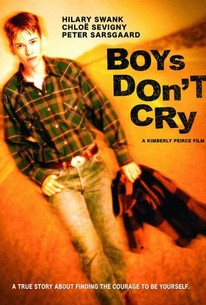
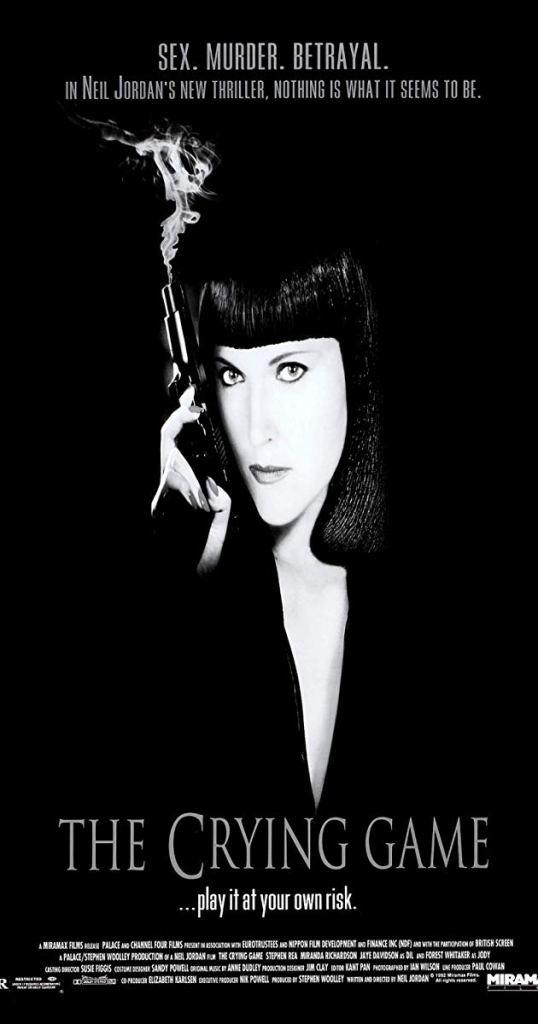
In my Feminist-Art-Theory-Power class last semester, we discussed the difference in the films The Crying Game and Boys Don’t Cry – and how these trans-characters are treated. In The Crying Game, the film’s plot operates on the basis that it is a disgusting twist that the lead character is a trans-woman. Boys Don’t Cry is a much better example of a positive trans-character in the 80’s/90’s, when it was not okay to be gay and the word “feminist” was answered with “femminazi.”

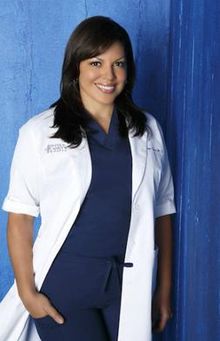
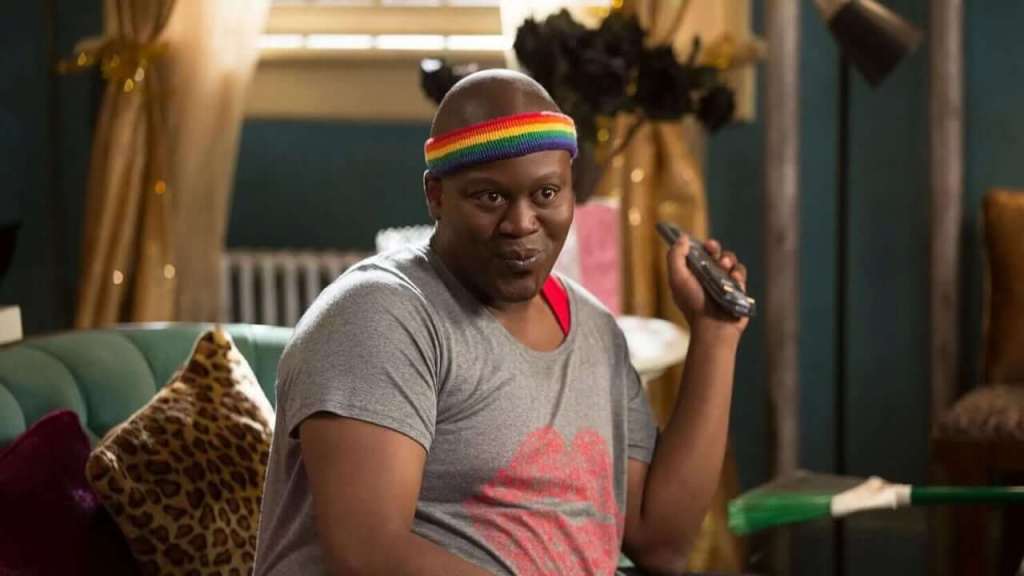
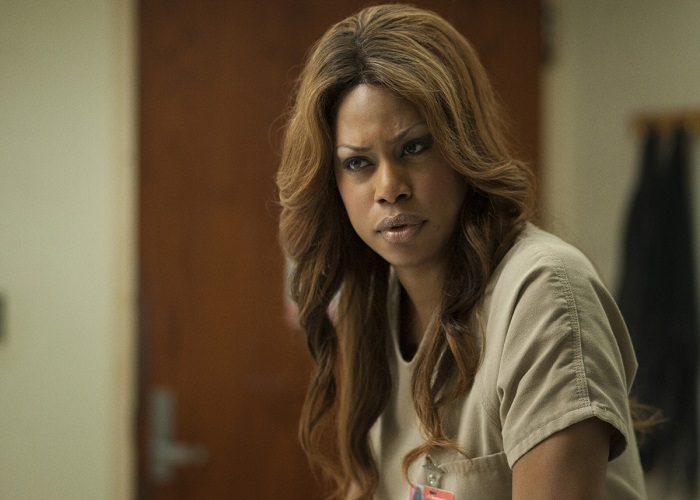
In today’s world, there are many more positive gay icons for teenagers to look up to. Just look at Kurt from Glee, Callie Torres from Grey’s Anatomy, or Titus from The Unbreakable Kimmy Schmidt, and although we have moved forward with gay cis-gendered people, I think that the trans-community is largely under represented. Orange Is the New Black‘s Sophia Burset cannot be enough.

Sophia Bursett, OITNB

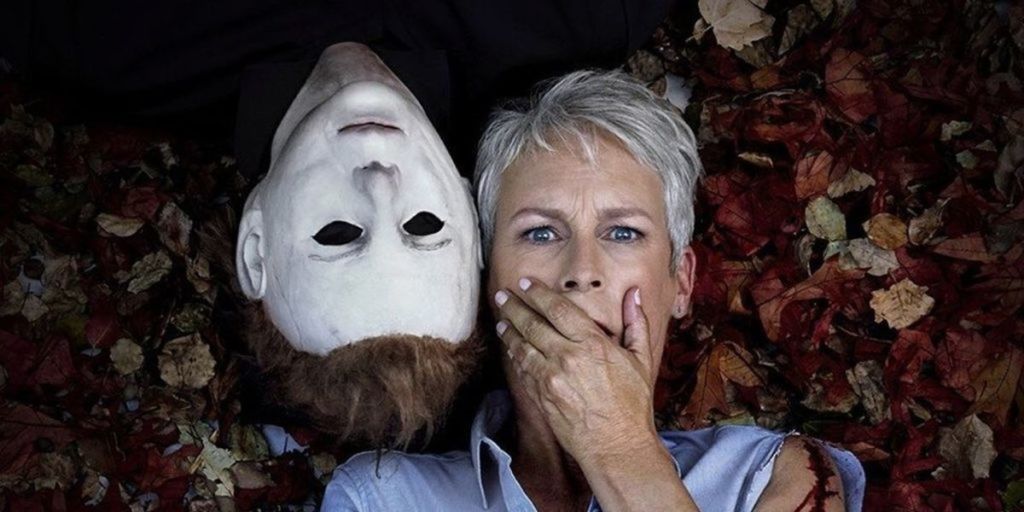
Feminism and Halloween

Halloween is not a feminist film. In fact, there is something about this film that makes it seem as though it is the embodiment of patriarchy in it of itself. As Susan Jeffords explains in her book, Hard Bodies: Hollywood Masculinity in the Reagan Era, the 80’s were a very hard time unless one was a “man’s man.” Masculinity in the 80’s lauded Tom Cruise as the patriarchal-male savior, over and over again. The 80’s were not a good time to be a woman, but more so, forced men into toxic stereotypes in order to fulfill what the country saw as appropriately masculine. Michael Myers embodies a hard body.

In their book, Film Feminisms: A Global Introduction, Kristin Lené Hole and Dijana Jelača describe the concept of “the final girl,” noting,

“The term final girl was originally coined by Carol J. Clover (1992), who noticed a telling pattern in horror movies, particularly in the subgenre of slasher horror (films involving serial murders), in which it is always a girl who escapes the grips of the psychopathic serial killer in the end,” (282).

Laurie Strode, Jamie Lee Curtis’s character, fits the definition of final girl perfectly. The fact that her “less serious,” more “promiscuous” friends are murdered says a lot about feminism in the 80s. Both Laurie and her friends question the validity of Laurie’s character seeing Myers; and through the self-taught gaslighting of women, to feel as though a man is following her, must make Laurie crazy. And Laurie feels crazy throughout the film, not settling on the idea of the Boogeyman until the last scene.

Hole and Jelača write, “Importantly, the final girl ultimately acts as her own savior, as her male companions prove less capable in fighting off the killer,” (283). This is true of Halloween, as it is true of many other horror films, notwithstanding, Halloween ends with Myers’s Doctor shooting him, causing him to fall backwards over a balcony, and ultimately, saving Laurie’s life. However, when they look over the balcony to see his dead body, he’s gone. He’s a hard body, and hard bodies do not show pain, especially in front of women.

Myers almost seems like a personification of the patriarchy, acting in ways that are so male-centric or coded for masculinity, that it’s hard to see Myers as anything other than that toxic evil himself. He kills women who don’t fit the mold of the “virginal woman.” He also uses a knife, which in it of itself is inherently phallic. The physical motion of stabbing someone with a knife can be juxtaposed with the same movement of sexually stimulating a penis, and the fact that he kills his naked sister, seemingly for having sex, makes it all the more real.

The first shot in the film is through Myers’s eyes, thus entering the film through the male gaze. Hole and Jelača quote Carol J. Clover again writing, “When the final girl… assumes the ‘active investigating gaze,’ she exactly reverses the look, making a spectacle of the killer and a spectator herself… The gaze becomes, at least for a while, female (60),” (283).  Everything else is seen through the male gaze as to what is appropriate and what is not. I haven’t seen Blumhouse’s 2018 sequel to Halloween, but according to Jess Joho, in an article on Mashable, the film attempts to subvert the final girl. This sequel is apparently a “feminist Halloween.”  After finally seeing the original in full, I can honestly say that I can’t wait to watch that film in its entirety. and compare the two.

Link to Mashable article: https://mashable.com/article/2018-halloween-reinvents-final-girl-feminist-horror-trope/

Design a site like this with WordPress.com
Get started