
Halloween is not a feminist film. In fact, there is something about this film that makes it seem as though it is the embodiment of patriarchy in it of itself. As Susan Jeffords explains in her book, Hard Bodies: Hollywood Masculinity in the Reagan Era, the 80’s were a very hard time unless one was a “man’s man.” Masculinity in the 80’s lauded Tom Cruise as the patriarchal-male savior, over and over again. The 80’s were not a good time to be a woman, but more so, forced men into toxic stereotypes in order to fulfill what the country saw as appropriately masculine. Michael Myers embodies a hard body.
In their book, Film Feminisms: A Global Introduction, Kristin Lené Hole and Dijana Jelača describe the concept of “the final girl,” noting,
“The term final girl was originally coined by Carol J. Clover (1992), who noticed a telling pattern in horror movies, particularly in the subgenre of slasher horror (films involving serial murders), in which it is always a girl who escapes the grips of the psychopathic serial killer in the end,” (282).
Laurie Strode, Jamie Lee Curtis’s character, fits the definition of final girl perfectly. The fact that her “less serious,” more “promiscuous” friends are murdered says a lot about feminism in the 80s. Both Laurie and her friends question the validity of Laurie’s character seeing Myers; and through the self-taught gaslighting of women, to feel as though a man is following her, must make Laurie crazy. And Laurie feels crazy throughout the film, not settling on the idea of the Boogeyman until the last scene.
Hole and Jelača write, “Importantly, the final girl ultimately acts as her own savior, as her male companions prove less capable in fighting off the killer,” (283). This is true of Halloween, as it is true of many other horror films, notwithstanding, Halloween ends with Myers’s Doctor shooting him, causing him to fall backwards over a balcony, and ultimately, saving Laurie’s life. However, when they look over the balcony to see his dead body, he’s gone. He’s a hard body, and hard bodies do not show pain, especially in front of women.
Myers almost seems like a personification of the patriarchy, acting in ways that are so male-centric or coded for masculinity, that it’s hard to see Myers as anything other than that toxic evil himself. He kills women who don’t fit the mold of the “virginal woman.” He also uses a knife, which in it of itself is inherently phallic. The physical motion of stabbing someone with a knife can be juxtaposed with the same movement of sexually stimulating a penis, and the fact that he kills his naked sister, seemingly for having sex, makes it all the more real.
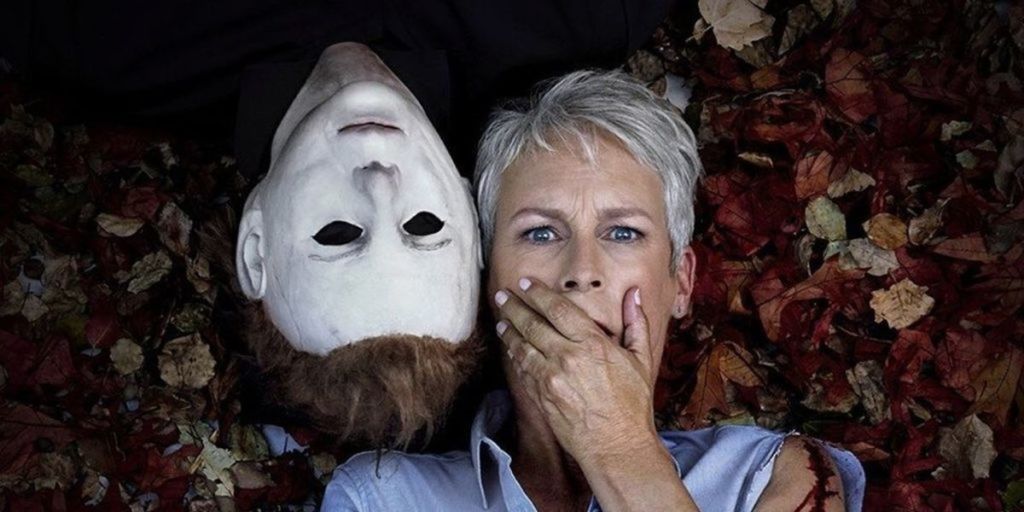
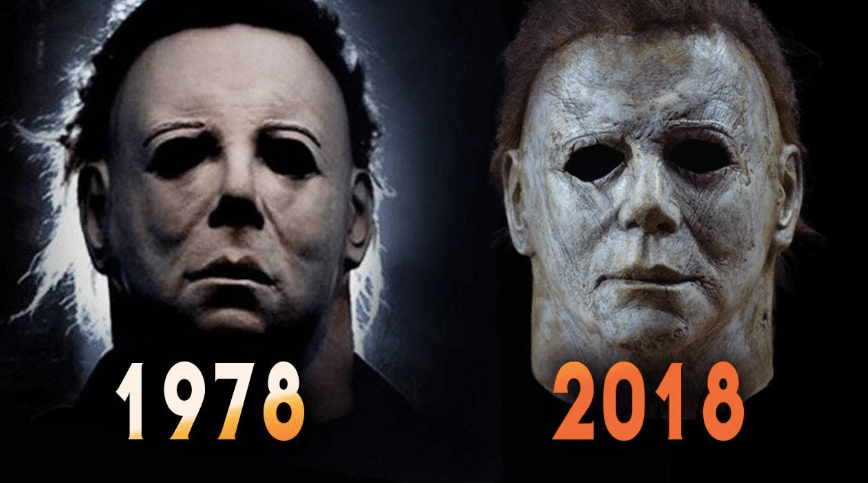
The first shot in the film is through Myers’s eyes, thus entering the film through the male gaze. Hole and Jelača quote Carol J. Clover again writing, “When the final girl… assumes the ‘active investigating gaze,’ she exactly reverses the look, making a spectacle of the killer and a spectator herself… The gaze becomes, at least for a while, female (60),” (283). Everything else is seen through the male gaze as to what is appropriate and what is not. I haven’t seen Blumhouse’s 2018 sequel to Halloween, but according to Jess Joho, in an article on Mashable, the film attempts to subvert the final girl. This sequel is apparently a “feminist Halloween.” After finally seeing the original in full, I can honestly say that I can’t wait to watch that film in its entirety. and compare the two.
Link to Mashable article: https://mashable.com/article/2018-halloween-reinvents-final-girl-feminist-horror-trope/
 Maddie's Blog for Film, Gender, Sexuality Class